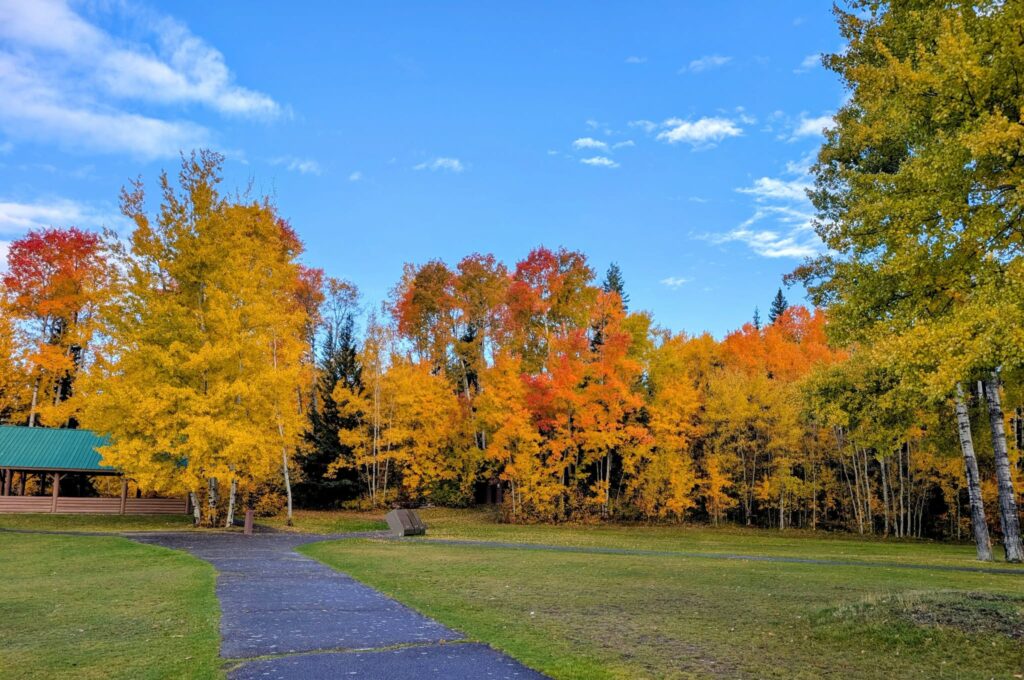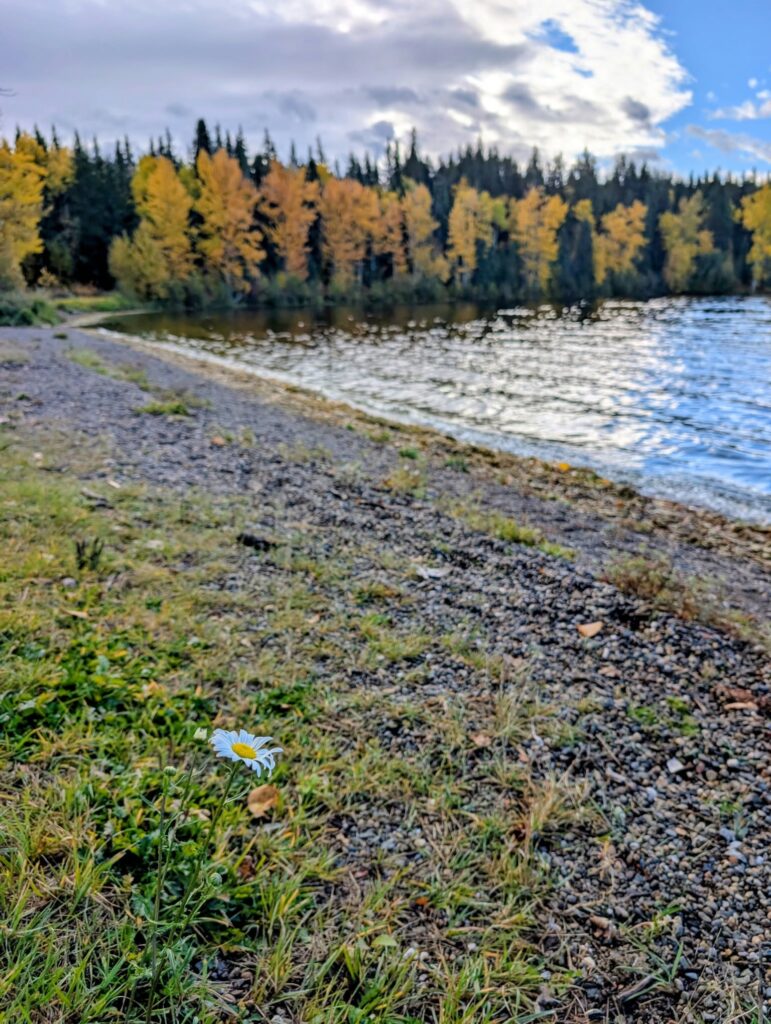
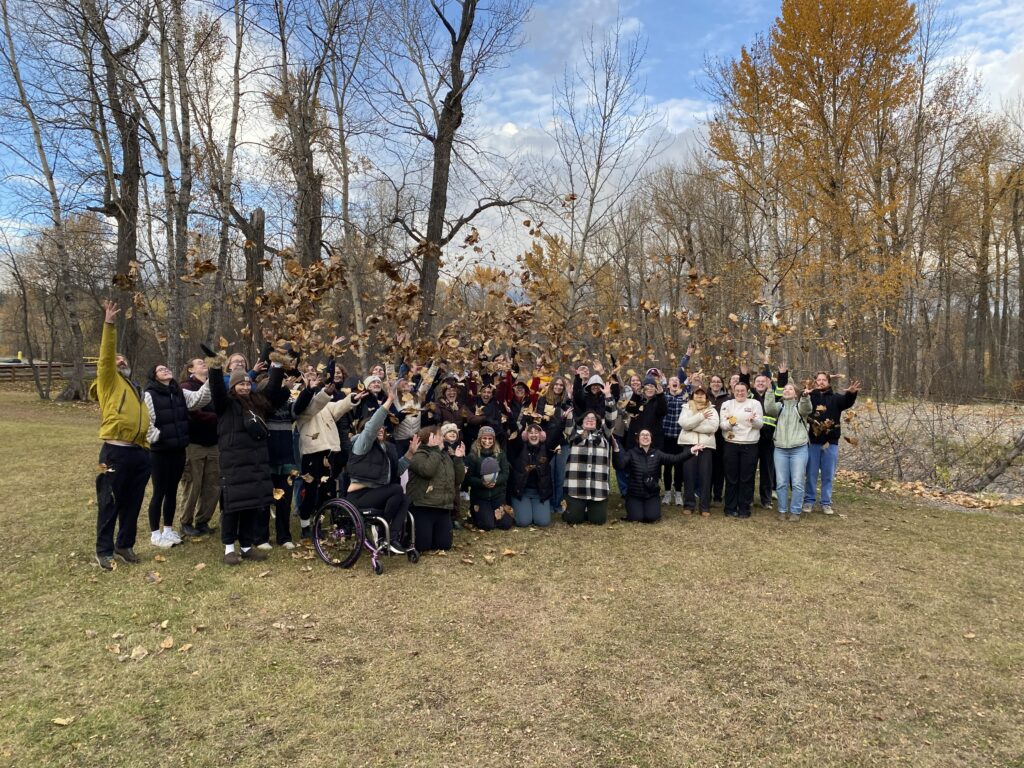
On oct 27th our class met at Cottonwood Island Parl for land and place-based learning and lesson planning. This was a great experience as last Thursday we also met at this park for another class. I found I was able to connect both classes together to inform my ideas on land and place-based learning.
Last Thursday when we met at the park and participated in an activity where we were split into two groups. Myself, in group A, was walked over to a tree and asked to get to know the tree by observation alone. Group B was given a book on trees and asked to study the Cottonwood tree. Then we all came back together and discussed the activity from both sides – now understanding that our tree was a Cottonwood tree. There were other groups in class that participated in a similar activity, but by using google, AI, or YouTube. As a class we found that the groups who were asked to observe had a much more personal connection with the tree and we all gave our trees a name, however our facts were lacking. In the other groups they had all the facts, but lacked the connection. This was a wonderful example of how both types of learning have a place in education.
I feel like we were then able to bring this learning to our class on Monday at the park. My group created a lesson plan for grade 2 Science where we are looking at the life cycles of trees in the area. Our lesson would follow a day in the classroom when we learnt about coniferous and deciduous trees. We would then take this knowledge to Cottonwood Island Park, look at trees with our students, and talk about what kind of trees they are. I feel this would make a perfect balance of experience, connection, and facts as was demonstrated in the class above.
Both of these classes at the park have made me think about the value of land and place-based education. I love how learning on the land and in place brings a personal and experiential connection to education that we would miss out on if we just stayed in the classroom.